Mixing Wood Tones in 2026: My Simple Rule for Cyprus Homes
Mixing wood tones without chaos: Angela's simple rule for Cyprus homes, from tiled floors to undertones, plus the near-miss mistake she sees all the time.
 Angela HadjiconstantinouFounder & Interior Designer19 Nov 2026 · 9 min read
In this article
You can mix wood tones in one room, and in most Cyprus homes you already do, whether you planned it or not. The trick to mixing wood tones is not matching them. It is giving them a hierarchy: one main wood, one clearly contrasting wood and one small accent, with the floor counting as one of the three.
My take: Two woods that are clearly different look intentional; two that are almost the same look like a delivery mistake.
Can you mix different wood tones in the same room?
Yes, and a room with only one wood usually looks like it was bought in a single afternoon. Real homes collect furniture over time. I studied interior design in Florence, a city where rooms gather pieces over centuries and nobody apologises for it. The aim is not a perfect match. The aim is a room where every wood looks invited. Start with the biggest pieces in your living room, because they set the tone for everything else.
What is my simple rule for mixing wood?
One leads, one contrasts, one accents. Choose a lead wood for most of the surface area, for example a light oak on the TV unit and the shelving. Then choose a second wood that is clearly different, such as walnut on the coffee table. Allow a small third note, a picture frame or a stool, and stop there. Four or five wood tones in one room is not eclectic. It is a garage sale.
Repeat each wood at least twice, so it looks chosen rather than orphaned. One walnut piece alone in an oak room looks lost; walnut on the coffee table and again on a dining chair looks like a plan.
Does a tiled floor count as a wood tone?
If it looks like wood, yes. Most Cyprus homes are tiled, and many newer apartments use wood-effect porcelain. That floor is your lead wood, whether you chose it as one or not. If the tiles are a warm honey colour, don’t add a dining table in nearly the same honey. Go clearly lighter or clearly darker. If the floor is white, beige or marble-look, you have more freedom, and a rug becomes the frame that holds the woods together.
The look: oak leads, walnut answers
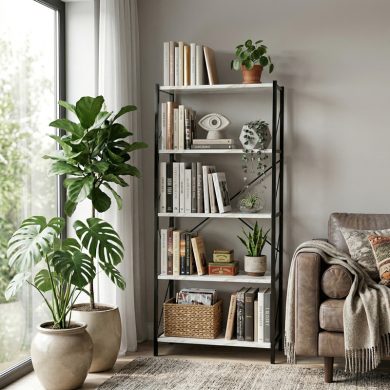
Oak and sonoma on the big pieces keep the room light, and a walnut coffee table gives the eye one clear, darker anchor.



Should wood undertones match?
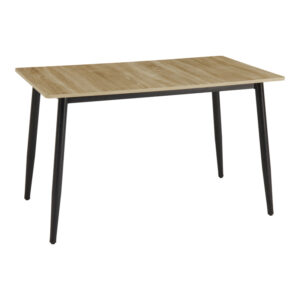
Undertone matters more than colour. Forget light or dark for a moment and ask whether the wood leans yellow, red or grey. Oak usually leans golden, walnut leans warm brown and grey-washed finishes lean cool. Warm with warm is easy. Warm with cool can work, but only with clear contrast and a bridge between them, such as black metal legs or a fabric that contains both tones.
Our light plays a part too. Strong, warm afternoon sun exaggerates red and orange undertones, so the orange-varnished pieces many of us inherited look even more orange at five o’clock. Solid wood also changes colour over the years in strong sun, so a perfect match next to a south-facing window will not stay perfect for long.
What is the mistake I see all the time?
The near-miss. Someone has oak-effect tiles, then buys an oak-ish TV unit, an oak-ish dining table and oak-ish bedside tables from three different places, and none of them are quite the same. Together they look like cousins who don’t speak. The opposite mistake is the full matching set, where everything is the same sonoma finish and the room feels like a catalogue page. Don’t chase identical. Choose distance. Furniture doesn’t need to be related to get along; it just needs to be introduced properly.
How to do it:
- Name your lead wood first, and count the floor if it is wood-effect.
- Make the second wood clearly lighter or darker, never ‘nearly’.
- Repeat each wood at least twice in the same room.
- Put something between woods that touch: a rug, black metal, stone or fabric.
- Judge undertones in daylight, not at night under a cold LED.
The look: walnut first, oak as the quiet friend
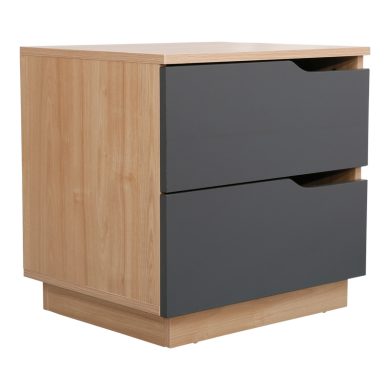
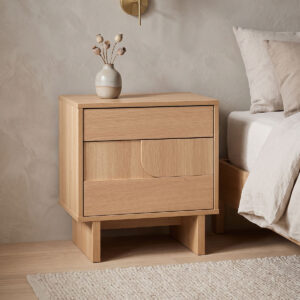
Here walnut carries the coffee table and the dining chairs, while oak bedside tables and wall shelves repeat the lighter note so it never looks accidental.

Not sure whether your woods are friends or enemies? Send a photo of the room on WhatsApp to +357 96 592277 and my team will give you an honest opinion. There are more columns like this one in Interior By Angela.
Add Argos The Classics as a preferred source on Google →
Frequently asked questions
Can you mix oak and walnut in the same room?
Yes. Oak and walnut are clearly different, so together they look intentional rather than mismatched. Let one lead and repeat the other at least twice in the room.
How many wood tones should you have in one room?
Two main wood tones plus one small accent is a safe maximum. If your floor is wood or wood-effect tile, it counts as one of them.
Do wood-effect floor tiles count when choosing wooden furniture?
Yes. Wood-effect tiles act as your lead wood, so choose furniture that is clearly lighter or clearly darker rather than nearly the same shade.
What do you put between two different wood finishes?
Use a bridge: a rug under the furniture, black metal legs, a stone top or a fabric that contains both tones. It separates the woods so the contrast looks deliberate.
Does strong sun change the colour of wood furniture?
Solid wood can change colour over the years in strong sunlight. In Cyprus, pieces next to a south- or west-facing window will drift, so curtains or shutters during the hottest hours help.