Your Balcony Is a Room: Styling a Cyprus Balcony for Summer and Winter
Balcony furniture in Cyprus, chosen like a room: Angela on materials that survive sun and salt air, small-balcony layouts and using it in winter and summer.
 Angela HadjiconstantinouFounder & Interior Designer21 Nov 2026 · 9 min read
In this article
In Cyprus your balcony is a room you can use for most of the year, so furnish it like one. Choose balcony furniture that can live outdoors, size it to the space, give the balcony one clear job, and plan for both August heat and January wind.
My take: Two good chairs and a proper table on the balcony are worth more than a formal living room nobody sits in.
Should you treat your balcony as a room?
Yes. Summer evenings outside are the best part of the day here, and on a sunny winter morning a south-facing veranda is often warmer than the apartment behind it. Our homes are built to keep the heat out, and in January they do it a little too well. Yet most balconies I see are furnished with the air-conditioning unit, a drying rack and two plastic chairs that have seen things.
Give it the same thought you would give your living room. I design exteriors as well as interiors, and the balcony is, in my opinion, the most under-used space in the average Cyprus apartment. I’ve written about the practical side in our guide to outdoor furniture for Cyprus sun and sea air; this column is about how it should feel.
What furniture works best on a Cyprus balcony?
Furniture that can stay outside and still look like furniture. On a narrow apartment balcony, two comfortable chairs and a small table are enough. On a wide veranda, think living room: an outdoor sofa or bench, a low table and a pair of chairs. Then decide on one job. Coffee, dining or lounging. Trying to fit all three onto a narrow balcony gives you none of them, plus bruised shins.
The look: teak, rope and a proper table
Rope, rattan or teak chairs with a white or natural table and a teak bench make a dining corner that feels warm in summer and still looks good empty in winter.


Which materials survive sun and salt air?
Teak, rope, synthetic rattan and powder-coated aluminium are the ones I trust outdoors here. Teak weathers to a silvery grey if you leave it alone, which I happen to like; oil it if you don’t. Rope and synthetic rattan cope with heat and look soft rather than industrial. Near the sea, salt air is hard on bare metal, so read the materials on the product page before you fall in love with the shape.
Cushions are the weak point. Sun fades them, rain soaks them and the dust finds them. Bring them in when you’re not using them, or choose covers that come off. Think of cushions as seasonal guests and the frames as residents.
How do you make a small balcony feel bigger?
Use fewer, lighter pieces and keep the floor visible. Chairs with open frames or woven seats let light through. A folding or compact table can move aside when you need the space. One outdoor rug defines the area better than five pots in a row.
Measure before you buy, including the door swing and the drying rack you will not, realistically, get rid of. Our guide on how to measure before ordering furniture covers the basics, and every product page lists the dimensions.
What changes between summer and winter?
In summer you live out there after sunset; in winter, around midday. Summer needs shade, a table for late dinners and cushions you can grab when the dust blows in. Winter needs a sheltered corner, a throw and furniture heavy enough not to wander off in the wind. I’d rather have pieces that stay out all year under covers than a set that spends six months in the storeroom.
The mistake I see all the time is buying for August only. Deep loungers look wonderful in July and pointless in January. A sofa and a table you can sit at work in both.
Three rules:
- One job per balcony: coffee, dining or lounging.
- Outdoor-grade materials only: teak, rope, synthetic rattan or aluminium.
- Plan for both seasons: shade for summer evenings, shelter for winter noons.
The look: the outdoor living room
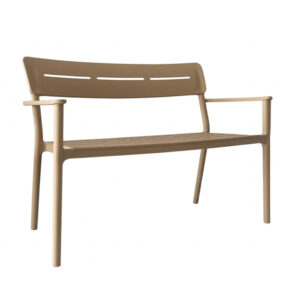
An outdoor sofa, a low coffee table and two light chairs turn a wide veranda into a second living room, the one you will actually use for most of the year.


Send a photo of your balcony and its measurements on WhatsApp to +357 96 592277 and my team will tell you what fits. If you are furnishing a whole flat, our guide to furnishing a small apartment in Cyprus is a good next read, and there is more from me in Interior By Angela.
Add Argos The Classics as a preferred source on Google →
Frequently asked questions
What is the best furniture for a small balcony in Cyprus?
Two comfortable outdoor chairs and a small or folding table are usually enough for a narrow balcony. Choose open frames or woven seats so the space feels lighter.
Which outdoor furniture materials last near the sea in Cyprus?
Teak, rope, synthetic rattan and powder-coated aluminium cope well with sun and salt air. Bare metal suffers near the coast, so check the materials on the product page.
Can outdoor furniture stay outside in a Cyprus winter?
Most outdoor-grade frames can stay out all year, ideally under covers in wet weather. Bring cushions indoors when you are not using them to protect them from sun, rain and dust.
How do you make a small balcony look bigger?
Use fewer, lighter pieces, keep the floor visible and define the space with one outdoor rug. Measure the balcony and the door swing before ordering.
Should a balcony be set up for dining or lounging?
Choose one main use. A narrow balcony works best for coffee or dining, while a wide veranda can take an outdoor sofa and low table like a second living room.