For outdoor furniture in Cyprus, choose materials that cope with strong sun, summer heat and salty sea air. Powder-coated aluminium, synthetic rattan, teak or other hardwood, polypropylene and textilene all perform well when matched to your space. Pick UV-resistant cushions, rinse salt off regularly and store soft furnishings over winter.
What your outdoor furniture has to survive
Cyprus is kind to outdoor living, but it is tough on materials. Furniture on a terrace, balcony or by the pool faces four main challenges.
- Intense UV light that fades colours and weakens some plastics and fabrics
- Summer heat that can make dark metal surfaces uncomfortable to touch
- Salt air near the coast, which speeds up corrosion on unprotected metal
- Winter rain and wind that soak cushions and move light chairs around
The best choice depends on where the furniture will stand. A covered balcony in the centre of Nicosia has different needs from a seafront terrace in Larnaca or a poolside area in Paphos.
Choosing the right material
Aluminium
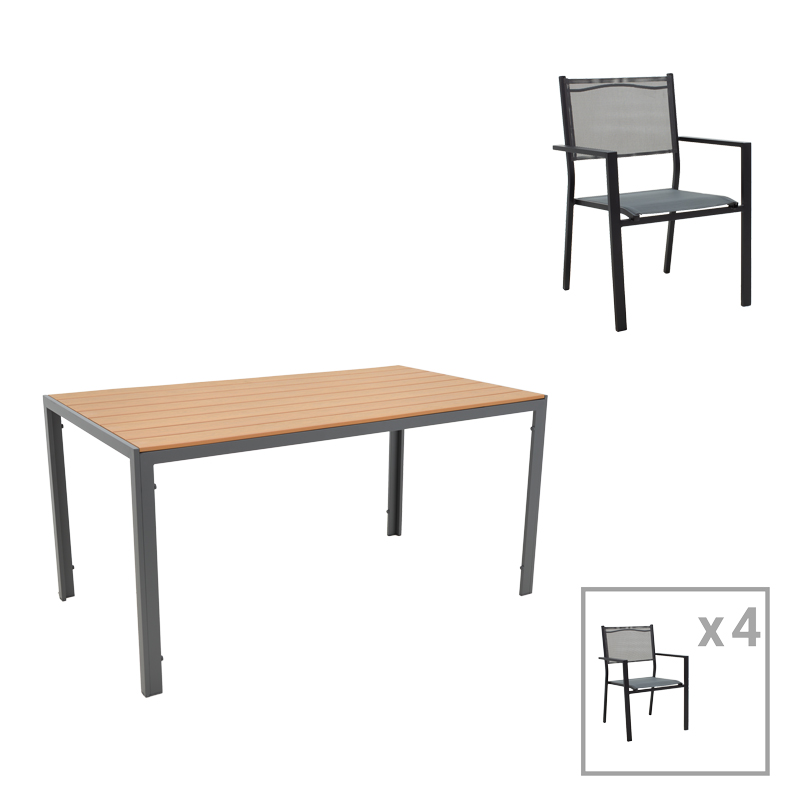
Aluminium is light, does not rust like steel, and is popular for dining sets and sun loungers. Look for a powder-coated finish, which protects the metal from salt and wear. Light-coloured frames stay cooler in direct sun. Over time, rinse off salt deposits, especially near the sea.
Synthetic rattan and wicker
Synthetic rattan is woven from resin fibre, usually over a metal frame. It gives the look of natural wicker without the upkeep, and it copes with sun and rain much better. Check the product page to see which frame it uses, and that it is made for outdoor use. It suits lounge sets, armchairs and corner seating.
Teak and other hardwood
Teak and similar hardwoods are warm, solid and long-lasting, with natural oils that help them resist moisture. Left untreated, the wood weathers to a silvery grey, which many people like. If you prefer the original tone, oil it once or twice a year. Wood is heavier than other materials, so it is stable in wind, but harder to move.
Plastic and polypropylene
Polypropylene chairs and tables are lightweight, easy to wipe clean and often stackable, which makes them practical for small balconies and busy terraces. Choose UV-stabilised products and avoid leaving very lightweight chairs exposed on windy days.
Textilene
Textilene is a woven mesh of coated polyester. It dries quickly, resists UV light and does not hold water, which makes it ideal for sling chairs, sun loungers and dining seats. A rinse with mild soapy water is usually enough to keep it fresh.
Cushions and UV protection
Cushions are often the first thing to fade or wear out. A few choices help them last.
- Choose fabrics designed for outdoor use, with UV resistance and a water-repellent finish
- Prefer removable covers that you can wash
- Pick medium or light colours, which show fading less than dark ones
- Look for quick-drying fillings so cushions are ready after a shower
Check each product page for the materials used. When you are not using the furniture, put cushions in the shade or indoors.
Care by the sea
Sea air is the biggest long-term test, because salt settles on every surface. A simple routine goes a long way.
- Rinse the furniture with fresh water every few weeks in summer
- Wipe metal frames dry with a soft cloth
- Clean fabrics and rattan with mild soap and water, not harsh chemicals
- Touch up any chips in the coating on metal frames as soon as you see them
- Check screws, feet and joints each season
Winter storage and protection
Winters in Cyprus are mild, but they bring rain, damp and wind. A little protection extends the life of your furniture considerably.
- Bring cushions indoors or store them in a dry, ventilated place
- Use breathable covers on furniture left outside, because plastic sheets can trap moisture
- Stack lightweight chairs and secure them so wind cannot move them
- Move furniture away from the sea-facing edge of a terrace in stormy weather
- Give everything a clean and dry before you put it away for the season
Matching furniture to your space
Measure your balcony or terrace before you shop, leaving room to walk around and to push chairs back. A small balcony suits a bistro set or folding chairs. A larger terrace can take a dining table, lounge set or sun loungers. Our size guide explains how to compare product dimensions with your space, and for evening use you can add lighting.
Think about sun and wind too. Place seating where it gets some shade in the afternoon, and avoid very light chairs on high floors or open rooftops. A parasol or pergola makes any set more comfortable in July and August.
Delivery covers the Republic of Cyprus, and is typically 15 to 20 days after purchase. The cost is calculated at checkout, and you can read more on the delivery page. If you run a hotel, restaurant or café, see our HoReCa range for business needs.
Quick checklist
- Terrace or balcony measured, with space to move
- Material chosen for sun, heat and coastal exposure
- Powder-coated finish on metal frames
- UV-resistant, removable cushion covers
- Product materials and dimensions checked on the page
- Light chairs secured against wind
- Fresh-water rinse routine planned for summer
- Winter storage or breathable covers arranged
Ready to browse? See all our outdoor furniture.
Frequently asked questions
What is the best outdoor furniture material for Cyprus?
There is no single best option. Powder-coated aluminium, synthetic rattan, teak, polypropylene and textilene all handle the sun well. Choose by location: coastal sites need corrosion-resistant finishes, and sunny terraces need UV-resistant materials.
Does sea air damage outdoor furniture?
Salt can corrode unprotected metal and dull some finishes. Choose protected finishes such as powder-coated aluminium, rinse furniture with fresh water every few weeks, and dry metal parts after cleaning.
Do I need to store outdoor furniture in winter?
Not always, but cushions should come indoors or go in a dry, ventilated place. Furniture left outside is best covered with a breathable cover and cleaned before the rainy months.
How do I stop cushions fading in the sun?
Choose UV-resistant outdoor fabrics in medium or light colours, and keep cushions in the shade or indoors when the furniture is not in use.